
Gwen Crabb: A Career Built on Resilience
True resilience is forged through defeat, injury, and setback. It is built in the moments when an athlete is tested, when success feels out of reach, and when they have to find the strength to keep going.
Gwen Crabb embodies that resilience.
The second row made her international debut at 19 during the 2018 autumn series against Hong Kong. Since then, she has established herself as a consistent presence in the international side with 42 international caps, representing Wales in 2 World Cups and 6 Six Nations.
But an athlete's journey is rarely a straight line to success. Behind the caps, the victories, and the achievements lies a story of setbacks, challenges, and true grit.
This is Gwen’s.
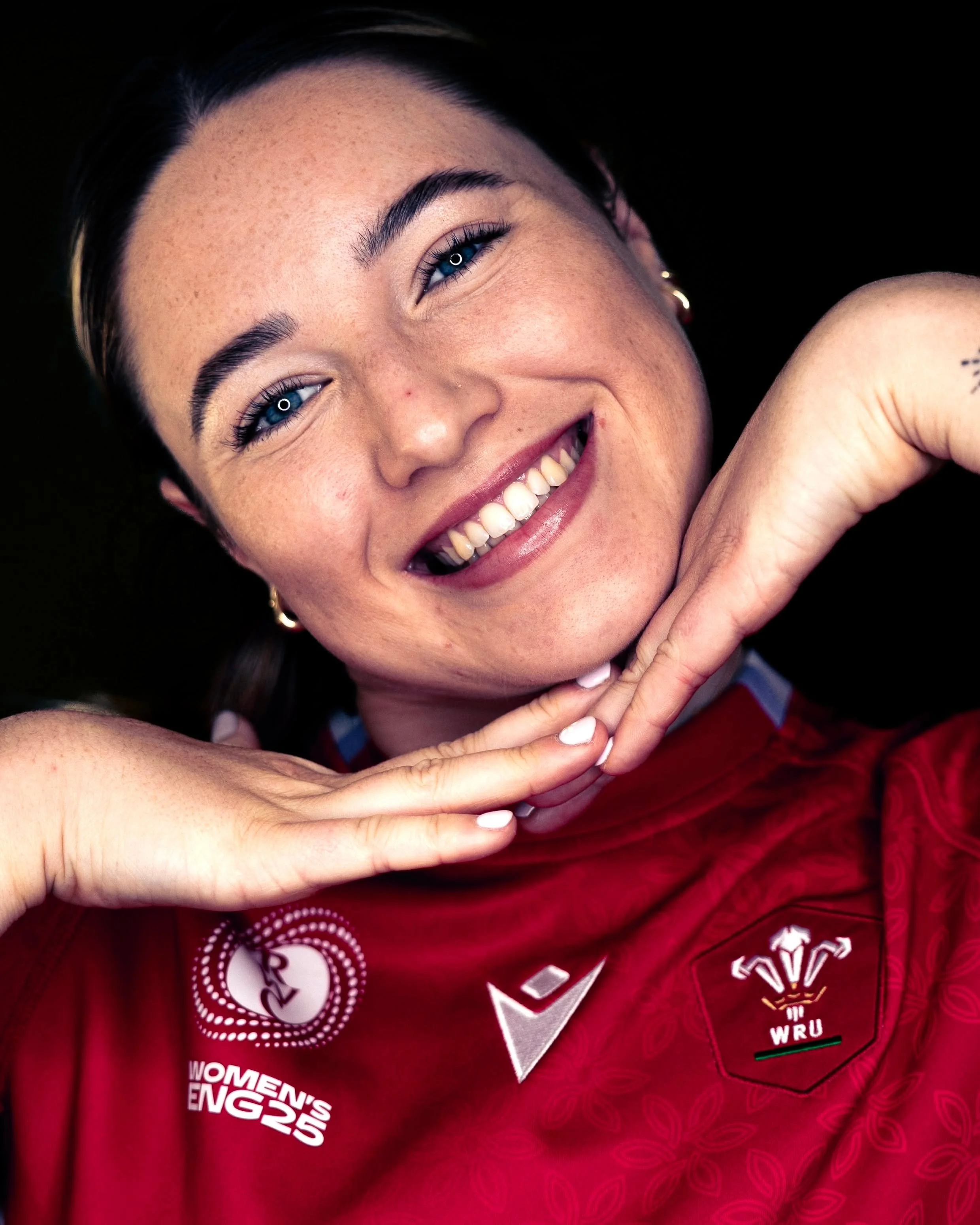
Photo Credit: Gwen Crabb
Gwen was always surrounded by sports growing up: “My school was great. We had all sorts of lunchtime and after-school clubs, and I just threw myself into as many of them as I could.” But, from the age of 4, there was only one sport on her mind: football.
“I grew up watching my dad play as a goalkeeper, standing behind the goal when he was playing on a Saturday. I wanted to be a goalkeeper. He was my role...”, she goes to correct herself, “He still is my role model.”
Despite the lack of a girls' team around that time, Gwen carried on with football, experiencing her first glimpse of elite sport after getting selected for the Wales age group at U15s. “I kind of burnt out a little bit. I threw so much energy and effort into it for so many years at such a young age; by the time I got to 15/16, I was not enjoying it as much as I should have.”
It was around this time that Gwen started playing rugby. “One of the girls I play football with asked, ‘Do you want to come and give this a go?’ And I thought, why not?”
It was love at first sight. “From my first session of rugby, I enjoyed it so much. The skills I’d developed through netball, football, etc, transferred so well into rugby that I was like, I’m really enjoying this.”
For around a year, Gwen was torn between the two sports. “I think when you're really young, you can get away with doing so much. But as I was getting older, rugby was getting more serious, football was serious; I just couldn't do them both. And so I had to make the decision.”
Rugby was the winner. “It just felt right to go with rugby, the skills, but also the values in terms of respect and discipline; all those things transferred so well because I had done it for the last 15 years.”
Whilst progressing through the Welsh youth sectors and making her international debut, Crabb played for the Ospreys during her time at University before signing for Gloucester-Hartpury in 2020. During this time, Gwen faced her first setback.
For the first five years of her career, Crabb had her eyes set on one thing: her first Welsh cap. “I did my ACL at 17, so to even get my first cap, I actually had to come back from an ACL injury.” After 18 months of hard work and dedication, she earned her first cap, "It almost made that moment even more of an achievement to me because I had this big hurdle I had to get over.”
“I could have easily sort of quit or let that get the better of me, so it was a massive thing.” Unfortunately, this wouldn’t be the last time Gwen had to come back from a major injury. Two ACL tears, a meniscus injury, four knee surgeries, and a broken ankle are just a few things she would have to overcome in the coming years.
“I had a pretty good run of being fully fit to play for a good few years, and you almost take it for granted.” Whilst her first cap is still one of her biggest achievements, these injuries shifted her mindset.
“I think actually getting through multiple injuries and being so close to stepping away from the sport to the point where I was planning my next steps. People would ask me how or why I kept going. But it was just a gut feeling that I’m not quite done yet.”
“I think now that’s my biggest achievement because of all of the achievements that have since come, and will come.”
Looking back to when she first started playing, she says, “My actual goal was to get 50 caps before I was 25 and I was on track for it, but then all these injuries hit. So now it’s more a case of wanting to get to that 50 caps as proof to show people that you can be at breaking point, really not feel like you can carry on, and do something, but actually persist and enjoy doing it and then get to that milestone.”
In the midst of injuries and setbacks, Gwen learnt some valuable lessons. “I think the biggest lesson was perspective. I struggle a lot with overthinking, and I feel everything so intensely that every time I get injured, I almost make a new five-year plan based on how I’m feeling at that moment. But I’ve learnt that in a month from now, this probably won’t even be a thing. I just need to rationalise things and calm down.”
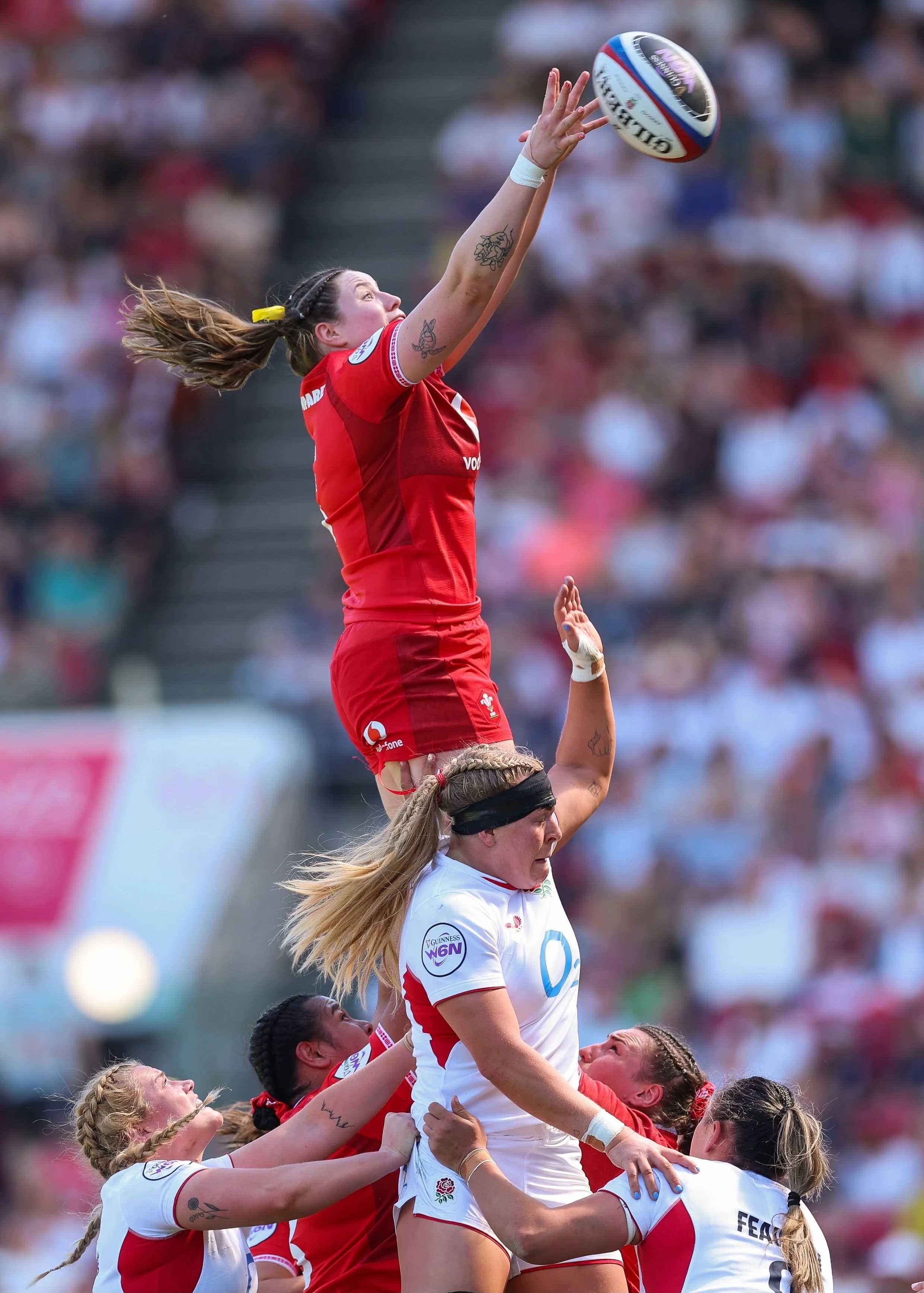
Photo Credit: Gwen Crabb
Receiving a full-time professional contract from Welsh Rugby in 2022, Gwen was able to put all her efforts into playing the sport she loves. “It was huge in terms of that we could train during the day rather than in the evenings because for the first six years of my international career, we were working all day and getting to train at 5 p.m. We're all exhausted.”
However, this made it harder to step away when injured: “All of the people around me are in this rugby bubble, and it can feel like everything is consumed by it, and it’s understanding there is more to life than sport because all my friends play rugby.”
“I internalised everything, and I was embarrassed to speak about how I felt. I think it came from a place of self-doubt, as the growth of women’s rugby is so fast that when you’re out for an extended period of time, it can feel like you’re getting further and further away, and I think I convinced myself that I was never going to be able to get back to the level that was required for me to keep my job.”
“I wasn’t eating as well. I wasn’t lifting as heavy. I wasn’t pushing myself as much. My mindset wasn’t where it usually was.”
Through speaking to the team’s sport psychologist, family, and friends, it “was the first step of what then helped me to kind of slowly rebuild.” After this experience, Gwen has opened up to social media about her journey.
“I just thought, if I’m thinking that, someone else probably is as well. It came through sharing a little bit of my rehab and receiving messages from people saying, "thank you for saying that” or “thank you for sharing that, I feel that same””.
This meant that when Gwen was diagnosed with endometriosis in 2024 after facing symptoms for 10 years, she didn’t think twice about posting it.
“I don’t know whether it’s because of all of the positive reception I had from posting about my ACL or anything with mental health and the positive impact that had on people, and I knew that there were so many women who either had diagnosed endo or suspected endo or had been pushed away for years.
And how many young girls within rugby or rugby fans that I could reach that were having these symptoms that I started having when I was 14, but had no idea what they were.”
One in ten women are diagnosed with endometriosis, taking on average 9 years and 4 months from the first GP visit to get a diagnosis. “It means that within any women's rugby team that has 30 to 40 people, there's like four to six women or girls that have endo, so it needs to be something that's spoken about.”
“I think it was important for me to do that straight away because if you get that diagnosis early and we get to young girls early, then the management of treatment can be better so that it doesn't stop you being able to achieve things within sport.”
For years, women’s health has been a taboo subject, with much research used in women’s sport based solely on men. Between 2014 and 2020, only about 6% of sports science studies focused exclusively on women.
Slowly, but surely, times are shifting. Cardiff University's medical engineering team is in the process of creating the first head impact assessment protocol designed specifically for female athletes, and more studies are being published regarding how the menstrual cycle affects players on and off the field.
This shift has only been possible because of the surge in the women’s game. And the fan figures have ultimately helped focus attention too. The most recent Women's Six Nations and the Women's Rugby World Cup have shattered attendance records, drawing crowds of upwards of 58,000 to 81,000 fans, alongside the World Cup Final drawing a peak audience of 5.8 million viewers in the UK.
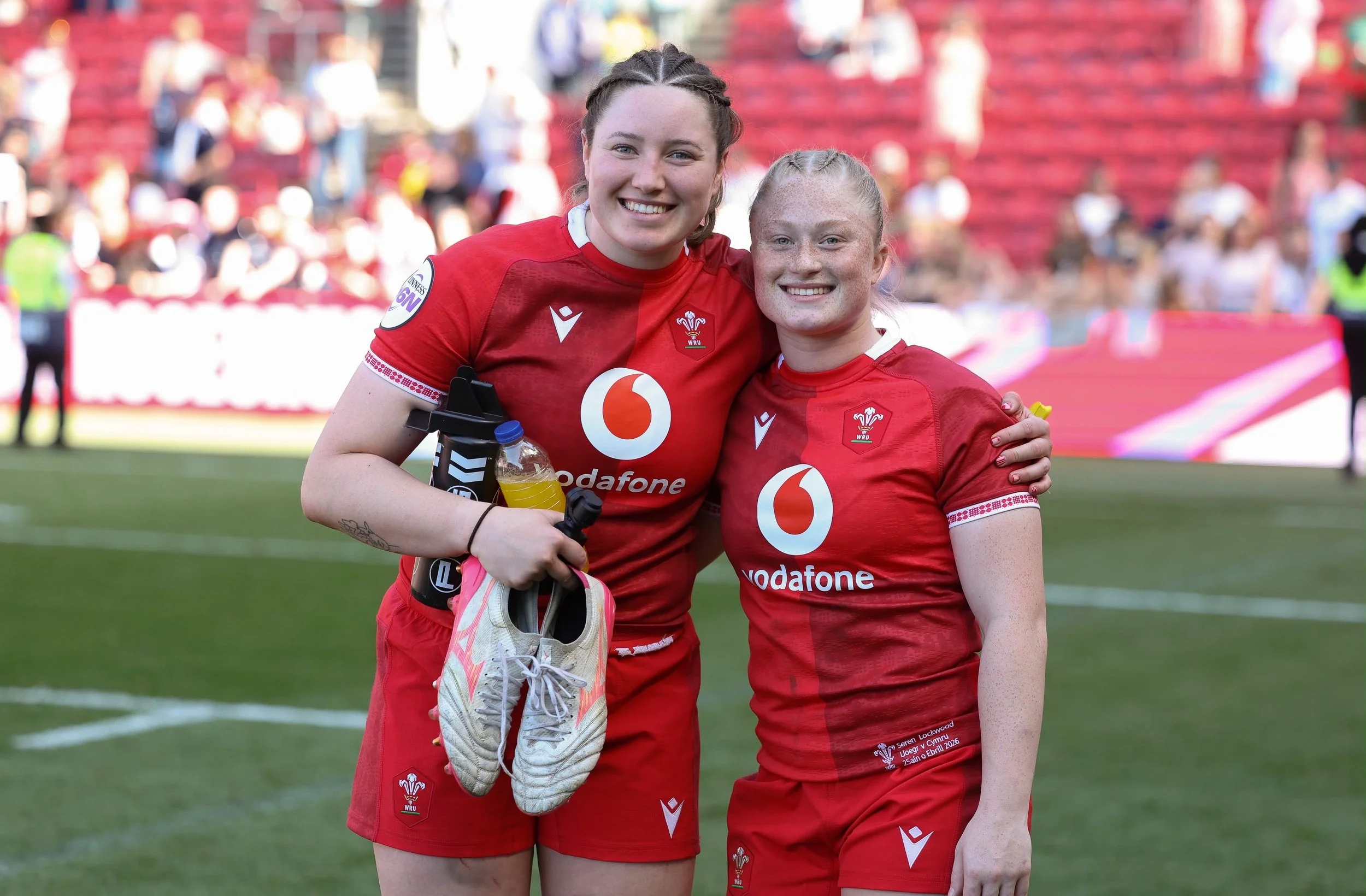
Photo Credit: Gwen Crabb
“I think people are starting to understand now that you can actually just be a rugby fan and just like both games [men's and women's].”
Playing for Wales means everything to Gwen. “It’s my opportunity to inspire those young girls and boys and older girls and boys as well. I want to show young people that you can go through chronic illness, you can go through setbacks and injuries, and you can also be doubted when you were younger or be the odd one out when you were younger, but still achieve success.
Women and girls can only be what they can see.